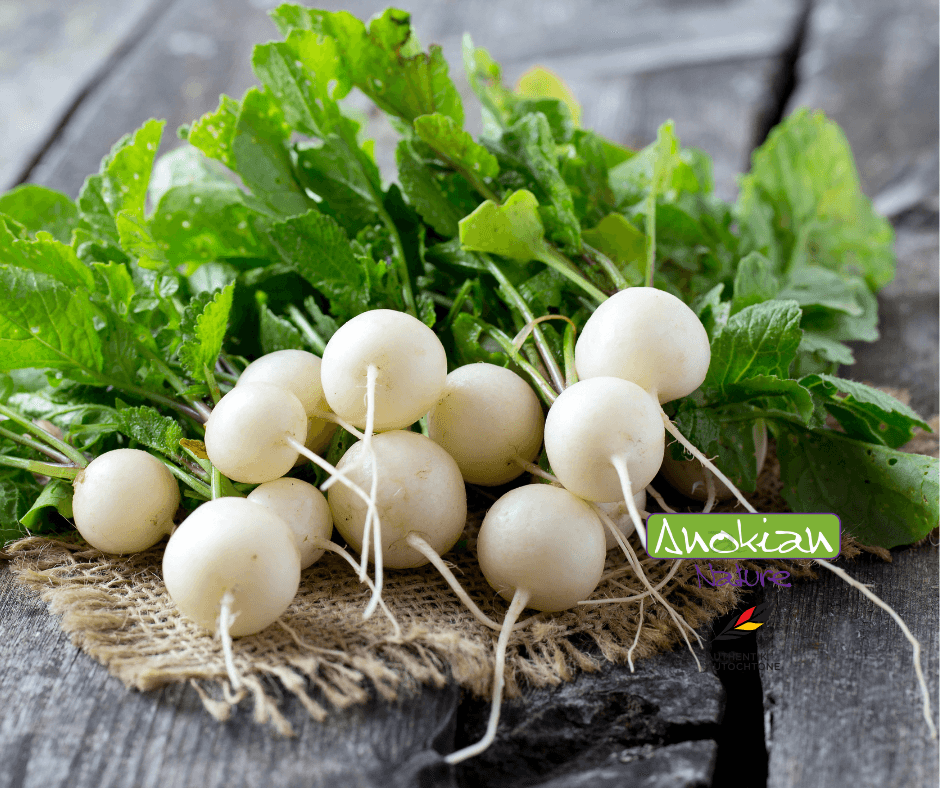
Snowball turnips, along with their leaves (tops), can be cooked in many ways to enjoy their mild, delicate flavor and health benefits. Here are several methods for cooking both the root and leaves:
- 1. Cook the Snowball Turnip Root
a. Oven roasted
Roasted Snowball turnip brings out its natural sweetness and melt-in-your-mouth texture.
Ingredients: Snowball turnips, olive oil, salt, pepper, herbs (thyme, rosemary).
Method :
Preheat the oven to 200°C.
Peel and cut the turnips into quarters or slices.
Mix with a drizzle of olive oil, salt, pepper and herbs of your choice.
Spread on a baking sheet and roast for 25 to 30 minutes, turning halfway through, until golden brown and tender.
- b. Mashed
Snowball Turnip Mash is light and creamy, perfect as a side dish.
- Ingredients: Snowball turnips, butter, milk, salt, pepper.
Method :
Peel the turnips and cut them into cubes.
Boil in salted water until tender (about 15 minutes).
Drain and mash the turnips with a little butter and milk until smooth.
Season with salt and pepper, and serve hot.
c. Snowball Turnip Gratin
Gratin is a comforting dish that enhances the sweetness of turnips. - Ingredients: Snowball turnips, cream, grated cheese (Gruyere, Parmesan), garlic, nutmeg, salt, pepper.
Method :
Preheat the oven to 180°C.
Cut the turnips into thin slices.
Arrange the slices in a baking dish, adding a little chopped garlic between the layers.
Pour cream over the turnips, season with salt, pepper, and a pinch of nutmeg.
Sprinkle with grated cheese and bake for 30 to 40 minutes until the top is golden and crispy.
d. Pan-fried
Quick and easy, this method retains the slightly crisp texture of the turnip. - Ingredients: Snowball turnips, butter or oil, salt, pepper, herbs (parsley or cilantro).
Method :
Peel and cut the turnips into small cubes.
Heat a little oil or butter in a skillet over medium heat.
Add the turnips and sauté until golden brown and tender (about 10 minutes).
Season with salt, pepper, and sprinkle with fresh herbs before serving.
2. Cook the turnip leaves (tops)
a. Sautéed turnip tops
A quick and easy dish that showcases the leaves. - Ingredients: Turnip greens, olive oil, garlic, salt, pepper, lemon juice.
Method :
Wash the tops well and remove the thickest stems.
Heat olive oil in a pan.
Add minced garlic and sauté until golden.
Add the turnip greens and sauté for a few minutes until tender.
Season with salt, pepper, and a squeeze of lemon juice before serving.
b. Turnip Greens Soup
Turnip greens add a green and nutritious touch to a soup. - Ingredients: Turnip tops, potatoes, onion, vegetable broth, salt, pepper.
Method :
Brown a chopped onion in olive oil.
Add diced potatoes and roughly chopped turnip greens.
Pour in vegetable stock and bring to a boil.
Simmer until potatoes are tender (about 15-20 minutes).
Blend the soup until smooth, season with salt and pepper, and serve hot.
c. Turnip top pesto
A tasty green pesto to accompany pasta, vegetables or toast. - Ingredients: Turnip greens, garlic, walnuts (or pine nuts), parmesan cheese, olive oil, salt, pepper.
Method :
Mix the washed turnip greens, garlic, walnuts, and Parmesan in a food processor.
Gradually add the olive oil until you get a creamy texture.
Season with salt and pepper.
Use as a sauce for pasta, bread or grilled vegetables. - 3. Combination of roots and tops
You can cook both the roots and tops together in the same dish. For example, add the sautéed tops to roasted turnips or stir the tops into turnip soup.
In conclusion:
Snowball turnips and their leaves are very versatile in the kitchen. The roots can be roasted, sautéed, mashed, or added to soups and casseroles. The nutrient-rich greens are delicious sautéed, in soups, or made into pesto. These two parts of the vegetable can be used together for complete and flavorful dishes.